

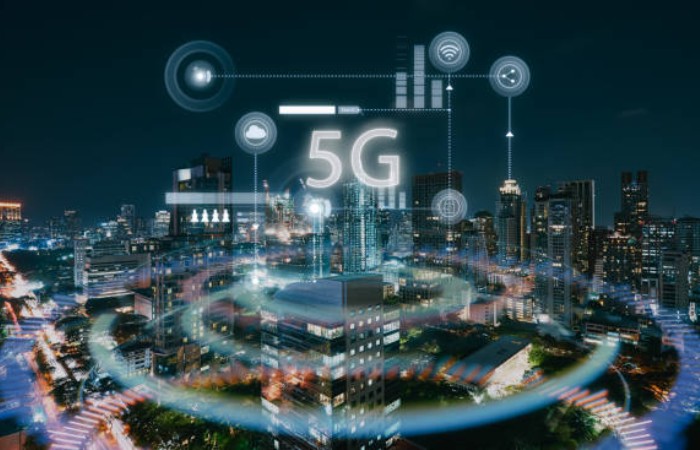
5G, or fifth-generation mobile technology, is a new telecommunications network standard launched by mobile operators in 2019.
5G networks operate on the same radio frequencies as their predecessors — 3G, 4G, and 4G LTE networks, which previously served most of the world’s mobile phones. However, improved speeds, reduced latency, and increased capacity give 5G networks shorter download and upload times, more stable connections, and greater reliability, making them the natural successor to 4G technology.
Why is 5G important?
As demand for internet access increases worldwide and new technologies emerge, the data generated grows exponentially. Over the next decade, the amount of data generated worldwide daily is projected to increase by several hundred zettabytes. The network infrastructure that 4G, 4G LTE, and 3G wireless networks rely on cannot handle this data. 5G, with its ultra-high speeds, low latency, and increased data capacity, is poised to meet the needs of new technologies, such as next-generation smartphones that require 5G coverage.
5G use cases
As 5G technology evolves, its potential to drive economic growth and improve connectivity is limitless. Here are some of the most ambitious ways 5G could transform our world:
Smarter communities
Whether you live in a dense urban environment or a remote rural area, 5G’s ability to collect information from internet-connected IoT devices will likely improve your daily life. City planners, emergency services, and many others expect 5G to help reduce traffic congestion, improve planning, reduce air pollution, and improve the lives of their communities in the coming years.
Better healthcare
In medical technology, 5G networks facilitate advances in remote surgery, data analysis, and patient care. For example, 5G’s low latency allows for real-time information sharing via HD video, potentially facilitating the widespread adoption of remote surgery. Additionally, real-time patient monitoring via IoT-connected devices using 5G networks will help doctors better care for patients without direct supervision.
Greater sustainability
5G will significantly improve the ability of companies to monitor their environmental, social, and governance (ESG) goals, such as carbon emissions, workplace safety, supply chains, and more. One of the many benefits of 5G is the ability to transmit information with relatively low power consumption compared to previous technologies. 5G technology will also facilitate the development of electric vehicles, smart buildings, and remote working, which have been shown to reduce carbon emissions.
How to Submit Your Articles?
When you have composed your blog, please submit it to contact@allintechblog.com.
After the submission, our team will analyse your submission for expurgation and check if it is unique before publishing.
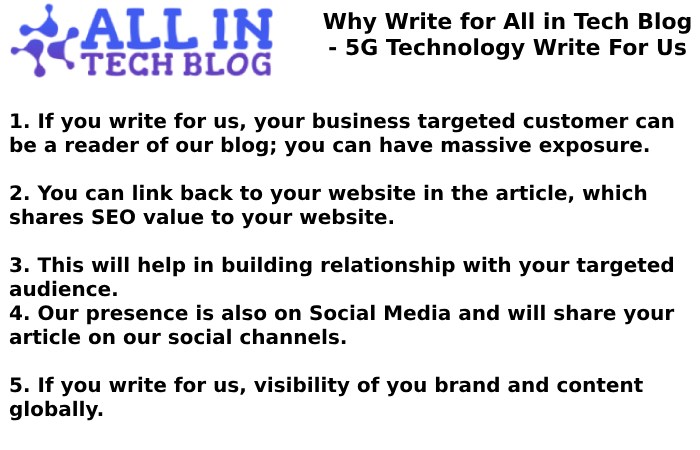
Why Write for All in Tech Blog – 5G Technology Write For Us
5G Technology Related Search Terms
- 5G technology ppt
- What is 5G technology and how it works
- 5g technology Wikipedia
- 5g technology in india
- 5g technology pdf
- 5G network speed
- 5G technology examples
- 5G disadvantages
- Best AI tools for productivity
- Free AI tools list
- Free AI tools for office work
- Best free AI tools for productivity
- Best AI tools for students
- Top 10 AI tools
Search Terms for 5G Technology Write for Us
- 5G technology write for us guest post
- Submit article on 5G
- Write for us 5G innovation
- Contribute to 5G tech blog
- 5G wireless technology guest post
- Write for us telecom and 5G
- Submit 5G research article
- Guest blogging 5G infrastructure
- Write for us Future of 5G
- 5G applications guest post submission
- Write for us mobile networks and 5G
- Guest post on 5G use cases
- Submit blog on 5G and IoT
- 5G security write for us
- Contribute articles on 5G technology trends
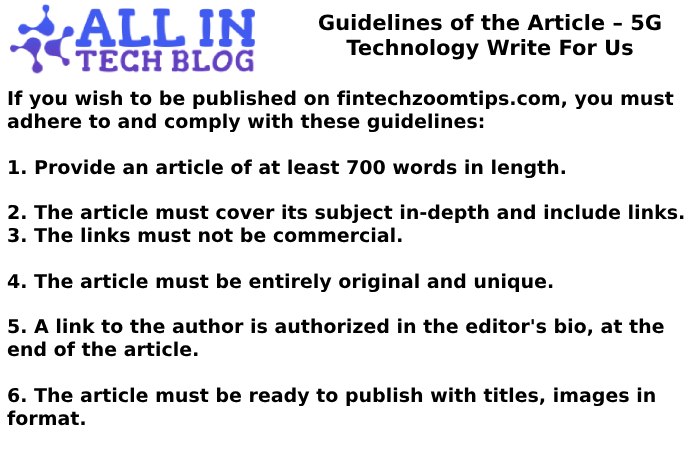
Guidelines of the Article – 5G Technology Write For Us
You can send your article to contact@allintechblog.com