

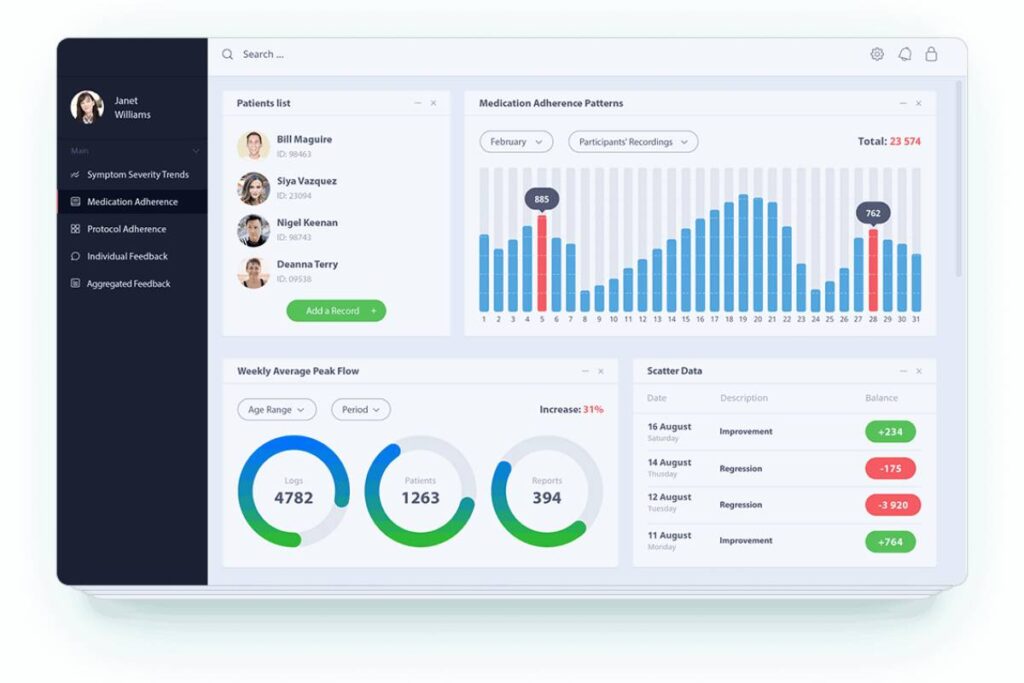
Dynamic Dashboards Cyber threats are becoming more compound and widespread, challenging organisations of all sizes to stay alert. Regulatory pressure, data breaches, and the sheer volume of attacks force security teams to adopt new methods of collecting, analysing, and responding to threat intelligence. Providing timely information about potential vulnerabilities and suspicious activity is critical to protecting sensitive information.
Today, companies can no longer rely solely on static reports or irregular updates; instead, they must implement dynamic and adaptive monitoring methods. Dynamic dashboards have become a powerful solution that enables rapid real-time analysis and interaction with threat intelligence. With these dashboards, security operations centres (SOCs) and IT departments can quickly identify anomalies, share data across the organisation, and respond to incidents promptly.
SciChart expert, scichart, advises cybersecurity dashboard developers to focus on clarity of visualisation and performance at scale. He emphasises the importance of choosing robust charting libraries and optimising visual components to handle large, complex data sets in real time. He also emphasises the importance of maintaining a clean and uncluttered interface so that security analysts can detect anomalies quickly. This commentary highlights the critical role of careful planning and using the right technology tools to create dynamic dashboards that provide helpful insights.
The following sections examine the changing landscape of cyber threat intelligence and how dynamic dashboards can revolutionise how organisations protect themselves from attackers. They dive into how real-time data analytics works, how these dashboards are built, and their associated challenges and opportunities. As the threat landscape evolves, security professionals need robust, flexible solutions that adapt to new threats. Dynamic dashboards and a strong approach to data collection, analysis, and visualisation are at the forefront of this change.
The Evolving Cybersecurity Threat Intelligence
Cyber threat intellect is no longer a luxury reserved for large corporations. Small and medium-sized businesses increasingly realise that sophisticated attackers do not discriminate between sizes. The methods used by attackers continue to adapt as they discover new network vulnerabilities, endpoints, and user behaviour. Phishing emails, ransomware, distributed denial of service (DDoS) attacks, and zero-day exploits are just a few common tactics cybercriminals use. Intelligence agencies must constantly monitor newly published vulnerabilities, malicious IP addresses, and extra indicators of compromise (IOCs).
Analysts and security experts also face balancing sophisticated technology with human expertise. Experienced analysts provide contextual knowledge that automated systems cannot replicate independently. Machine learning algorithms and advanced correlation engines can detect anomalies, but the human element remains critical in interpreting ambiguous signals. Dashboards link technology and human expertise by combining algorithmic and human information into a single, easy-to-interpret interface.
Analysts and security experts also face balancing sophisticated technology with human expertise. Experienced analysts provide contextual knowledge that automated systems cannot replicate independently. Machine learning algorithms and advanced correlation engines can detect anomalies. Still, the human element remains critical in interpreting ambiguous signals by combining algorithmic and human information in a single, easy-to-interpret interface: Dashboards bridge technology and human expertise.
The key benefit of real-time analytics is rapid feedback. When anomalies are detected, alerts are quickly sent to the appropriate personnel, allowing them to respond, investigate, and escalate if necessary. These quick actions can prevent malicious code from spreading or an attacker from extracting sensitive data. Real-time data monitoring transforms threat response from reactive to proactive in an era where sophisticated and persistent threats can remain dormant for months.
Dynamic Dashboards: The Backbone of Modern Threat Monitoring
Dynamic dashboards are essential for transforming raw data into visual information that security professionals can immediately use. They allow you to create custom widgets or dashboards that display metrics critical to your organisation’s security. These metrics include firewall activity, user authentication trends, database query anomalies, and intrusion detection logs. Additionally, dashboards can be filtered to highlight specific time intervals or data sources, allowing analysts to analyse the underlying data quickly.
The actual value of these dashboards becomes most apparent during security incidents, when time is of the essence and decisions must be made based on data. Employees can quickly drill down from a high-level overview to detailed logs, pinpointing which system was compromised and how. They can then share these findings with incident response teams and executives. This centralised, holistic approach saves valuable time by eliminating the need to use multiple tools or rely on separate, disparate reporting systems. Additionally, dashboards reduce the likelihood of human error by consolidating disparate information streams into a single interface.
Some organisations choose to use multiple dashboards tailored to different roles. Executives may see an overview of threat activity across geographies, while security analysts may get more detailed visualisations that show packet-level scan results. Data scientists may also need a specialised view to run specific models on the collected data. However, each view is powered by a single source of truth, ensuring consistency and accuracy across all teams.
Tools and Frameworks for Building Sophisticated Dashboards
Developers responsible for creating dynamic dashboards often turn to versatile frontend technologies, frameworks, and libraries that make it easy to create complex data visualisations. A flexible approach ensures that even as backend systems evolve, the visual layer can adapt with minimal friction. Many security-conscious organisations prefer solutions that keep data securely on-premises or in a tightly controlled virtual private cloud (VPC) rather than exposing sensitive information to third-party services.
When creating dashboards, the choice of chart types and interactive features can significantly impact both performance and usability. Line charts, heat maps, and multi-level time series visualisations are invaluable for showing threat dynamics. Pie and bar charts help you understand the distribution of malicious traffic across specific ports or protocols, while geographic maps help you highlight activity originating from particular regions. It’s critical that these visualisations not only look aesthetically pleasing, but also provide clarity in the face of potentially large amounts of data.
While there are many charting libraries, developers use proven libraries with proven reliability, detailed documentation, and community support. This can be especially important when working with complex, large data sets, as some libraries are better at handling large-scale data operations than others. Regardless of the tool chosen, the primary goal remains to present security information so teams can make informed decisions with minimal latency. Since threats can escalate within minutes or seconds, the delay between data collection and dashboard creation should be minimised.
Integrating Threat Intelligence Feeds
The effectiveness of any dynamic dashboard is directly related to the excellence and relevance of the data that feeds it. Threat intelligence comes from various sources, including commercial vendors, open-source data analytics platforms, and private information-sharing groups. These sources typically contain up-to-date lists of malicious IP addresses, phishing sites, and other indicators to which security professionals should pay attention. Analysts can compare local records against known blocklists and suspicious domains by integrating these sources into a dashboard.
Organisations that collect their internal logs can supplement external threat data with internal analytics. This process can involve storing large volumes of unstructured logs in a data lake and then analysing them to identify meaningful patterns. When correlated with data from external sources, these patterns can be critical to detecting advanced persistent threats that take a long time to understand and integrate into an organisation’s environment. Displaying internal anomalies and external threat data in a single dashboard reduces response time and the risk of false positives.
The challenge is effectively managing multiple feeds, each of which may use different data formats or update rates. Poor integration can lead to inconsistencies or duplicate data and false alerts. The solution is a carefully planned workflow that normalises data, reconciles conflicting information, and prioritises alerts based on severity. Automation is essential at this stage, as manual management of these feeds is nearly impossible in large networks. Dynamic dashboards remain relevant and reliable by ensuring seamless integration and constant updating of threat data.
Visualising Data for Different Security Roles
One of the key benefits of dynamic dashboards is their ability to tailor visualisation to the specific needs of different security roles within an organisation. A security analyst may need a real-time network flow map to identify anomalies in outgoing traffic quickly. A vulnerability manager, on the other hand, will focus more on software update trends, newly discovered vulnerabilities, and long-term system health reports. Executives may only need high-level summaries that reflect the overall threat level, the current status of mitigations, and potential areas of business risk.
Flexible dashboards allow these views to be integrated without forcing each user group to use completely separate systems. Role-based access control can be applied to ensure that sensitive information is only evident to authorised personnel. This helps unify an organisation’s security initiatives under a single umbrella while providing data privacy. A well-designed dashboard can be a one-stop shop for all cybersecurity tasks, from day-to-day operations to strategic planning.
For example, a CISO might use a consolidated interface that aggregates the most important metrics into a concise format. They might see metrics such as the number of blocked intrusions in the last 24 hours, the status of key patches, and the overall risk rating of the organisation as determined by machine learning algorithms. A vulnerability manager, on the other hand, might see a chronological list of unpatched systems sorted by severity, along with a heat map of pending patches. This personalised approach to data presentation eliminates unnecessary overload and ensures that every team member has immediate access to the information they need.
Overcoming Data Overload Dynamic Dashboards
In cybersecurity, data overload is a constant problem. Networks generate massive volumes of logs, events, and telemetry data every minute, making it difficult to separate important information from the noise. Data overload can lead to analyst fatigue, causing them to miss essential alerts among less urgent ones. Overcoming this problem requires not only technological innovation, but also careful management of the dashboards themselves.
The first step is to implement intelligent filters that segment and prioritise data based on relevance. This can be achieved using advanced correlation techniques, machine learning classifiers, or heuristics. The goal is to ensure that the user only sees actionable alerts. Automated systems can perform large-scale pattern recognition tasks, analysing logs to identify unusual behaviour patterns and then analysing them for further investigation. When this process is implemented effectively, dashboards will not be overloaded with irrelevant metrics, hindering effective monitoring.
The second step involves effective design practices that visually group related information. Grouping technologies are often used in the backend, but the dashboard should incorporate them in a way that fits easily into the user interface. Instead of individually showing a security analyst hundreds of failed login attempts, the dashboard can group them into a single trend view or graph, greatly simplifying anomaly investigation. As a last line of defence, robust search and query functionality is essential. This allows analysts to analyse the data in greater depth when needed, without cluttering their daily view.
Scalability and Performance Considerations
Cyber threat dashboards need to scale as an organisation’s technology infrastructure expands. The rise of remote work, raincloud computing, and Internet of Things (IoT) devices has significantly increased the number of potential entry opinions for attackers. This expansion means more data, more logs, and more events. If a dashboard doesn’t scale, it can quickly become a liability rather than a tool. Users may experience slow loading times or incomplete data, making it difficult to respond rapidly to threats.
Achieving scalability starts with a robust backend architecture that efficiently handles massive data flows. Horizontal scaling solutions like distributed databases or microservices help maintain high data throughput even as volumes grow. However, it’s equally essential that the frontend design handles this data flow without sacrificing interactivity and responsiveness. Some charting libraries, especially those that display data directly in the browser, can struggle to handle large amounts of data.
When engineers talk about “JavaScript charts,” they often talk about frameworks designed to integrate complex data seamlessly into web dashboards. Choosing an optimised library is critical, as poor performance can lead to lag and make it difficult to interpret data quickly. Approaches like incremental rendering, where charts are updated only with new data rather than being completely redrawn, or using WebGL for GPU-accelerated charts, can help maintain high performance. These techniques ensure that an organisation has a high level of security, regardless of the scale of the underlying data.
The Role of Collaboration and Incident Response
Dynamic dashboards not only allow you to visualise threat data, but they also facilitate collaboration. Large organisations often use dedicated security operations centres (SOCs) where multiple analysts work shifts to contribute to the detection and response cycle. Information must be quickly shared across teams when a new threat actor or exploit is discovered.
Dashboards can be integrated with communication tools such as real-time chat applications, allowing analysts to comment on findings and communicate directly within the dashboard interface. Some dashboards integrate with incident response workflows, allowing teams to assign tasks, track progress, and update statuses without switching between multiple tools.
This collaborative environment nurtures a culture of shared accountability and continuous learning. When a suspicious event is detected on a dashboard, an analyst can start a discussion or share a link to an image. Colleagues can share their perspectives, provide historical context, or provide additional information related to the event. This method of instantly sharing knowledge minimises delays in decision-making, allowing the team to develop strategies to contain or eliminate threats quickly. Over time, the dashboard becomes a repository of collective intelligence, aggregating the organisation’s best practices and lessons learned from previous attacks.
Maximising Dashboard Effectiveness Through Iteration
Like any software tool, a threat dashboard is never fully complete. Security issues evolve, business priorities change, and technology advances occur. Maintaining a tall level of efficiency requires constant improvements to the dashboard design, data sources, then user experience. Analyst feedback is invaluable in understanding which features are most important and rarely used. Developers ensure the dashboard is relevant and easy to use by aligning feature development with real-world workflow needs.
Metrics such as alert response time, false positive rate, and average time to incident detection can indicate success. If these metrics aren’t improving, it may suggest that the dashboard design or data sources need to be reworked. A feedback loop in which analysts provide information directly to development teams can accelerate the process of implementing incremental improvements. In large, distributed organisations, these changes can be rolled out gradually, allowing for controlled rollout and A/B testing of new features.
In addition to improving the user experience, upgrading the underlying infrastructure is also essential. Expanding logging and analytics capabilities, improving data quality, and implementing advanced techniques such as behavioural analysis or anomaly detection can enhance the effectiveness of the dashboard. By treating the dashboard as a living project rather than a one-time implementation, organisations can remain agile in protecting against ever-changing threats.
Navigating Common Pitfalls Dynamic Dashboards
While dynamic dashboards offer great benefits, they also have potential drawbacks that security professionals must consider. A common problem is overcomplication, with dashboards containing too many widgets, charts, and real-time data. This can overwhelm analysts and reduce the overall usefulness of the dashboard. Maintaining a balance between completeness and clarity is critical to ensuring the information displayed is useful.
Another potential drawback is reliance on a single vendor or set of technologies. While vendor solutions often offer comprehensive solutions, they are not always perfectly tailored to an organisation’s threat landscape. Over-reliance on a single system can also create a single point of failure.
A layered approach, where multiple tools are integrated into a dashboard, provides resilience and allows for various perspectives on the data. Integration testing, robust service level agreements (SLAs), and backup systems can reduce the risk of technology failures, ensuring that the dashboard remains operational even in challenging situations.
Finally, security should be prioritised at every dashboard development and implementation stage. Ironically, a dashboard designed to protect sensitive information can become a target. Security controls such as encoding, multi-factor authentication, and strict access controls should be standard. Regular audits and penetration testing of your dashboard infrastructure help identify vulnerabilities before attackers can exploit them.
Future Prospects and the Road Ahead Dynamic Dashboards
As threats become more sophisticated, so will the tools used to combat them. Artificial intelligence (AI) and machine scholarship will continue to shape the future of cybersecurity dashboards, enabling predictive models to anticipate new attack vectors and recommend proactive measures. Augmented reality (AR) or virtual reality (VR) interfaces, still in their infancy in cybersecurity, could allow analysts to visualise complex threat landscapes in new ways. Blockchain-based solutions could also find their way into the future, offering tamper-proof logs that provide a complete activity record.
The move to zero trust architecture is another factor that will impact the design of future dashboards. Zero trust assumes that every user, device, and network is potentially hostile until verified. This approach generates many verification events that need to be monitored. Dashboards of the future must be able to collate these verification logs and present them in an understandable format. They must also account for extreme cases, such as IoT devices, which can number hundreds of thousands in some organisations.
In real-time visualisation, JavaScript libraries and frameworks will likely continue to improve. As new frameworks emerge and existing ones mature, the ability to render large data sets and create complex interactive features will improve. While JavaScript charts can handle significant amounts of data, future innovations will further expand these capabilities, perhaps adding advanced 3D or multi-dimensional charts to provide even more visual representations of threat data.
Conclusion
Cyber threat intelligence is a critical line of defence in a world where adversaries are constantly evolving and unpredictable. Dynamic dashboards have become a powerful tool for analysing data in real time, allowing
organisations to spot anomalies, communicate effectively, and take decisive action against potential breaches.
Analysts can gain a complete view of the security situation by integrating multiple data sources—from internal logs to external threat sources. These dashboards, supported by robust frameworks, are critical in changing massive quantities of raw data into accurate, actionable insights. Their effectiveness depends on flawless operation, careful design, and continuous improvement.
This strategic approach to monitoring goes beyond simple statistics, allowing companies to respond to vulnerabilities proactively rather than as an afterthought. The role of visualisation in cybersecurity will continue
to grow, especially as machine learning models become more effective at identifying subtle threats. Integrating these models into intuitive dashboards promises to reduce alert fatigue while identifying significant anomalies in a data-rich environment.
Organisations looking to stay on top of emerging threats must understand that a well-designed dashboard is more than just a monitoring tool. It is a dynamic, collaborative platform that brings together different security
disciplines, facilitates knowledge sharing, and ensures that every incident, large or small, receives the attention it deserves on time. With an innovative approach incorporating new technologies and best practices, dynamic dashboards can be the foundation of an effective cybersecurity strategy, ensuring resilience in an ever-changing digital world.